


Behavioural science has quietly reshaped how researchers, regulators and operators think about sports betting over the last decade, and the findings now inform most of the responsible-play tools a Serbian player meets in the account menu. This long piece walks through the specific behavioural patterns that shape sports betting decisions, the research that documented each one, and the small corrections a Serbian player can apply to their own weekly routine to work with the science rather than against it.

None of what follows is a judgement about the hobby. The behavioural patterns described below surface in every priced-entertainment product; they are not unique to sports betting. The value of knowing about them is that they become easier to recognise in your own routine, and recognition is where the behavioural interventions begin to work.
| Pattern | Where it surfaces | Behavioural correction |
|---|---|---|
| Loss chasing | Doubling stakes after a loss | Pre-set deposit limit |
| Hot-hand bias | Doubling stakes after a win | Flat staking rule |
| Illusion of control | Over-weighting own knowledge | Implied probability check |
| Anchoring on headline odds | Taking a boosted price without checking native margin | Two-second overround sum |
| Availability heuristic | Over-weighting recent form | Written view before the slip |
| Loss aversion | Overusing cash out on losing positions | Pre-set cash-out trigger |
| Mental accounting | Treating winnings as free money | Single ledger for all balances |
Loss Chasing Is the Most Expensive Pattern
Loss chasing is the most studied and most expensive behavioural pattern in casual gambling. The mechanism is simple. A losing bet triggers a desire to recover the amount lost. The desire pushes the next stake higher than the planned one. The higher stake makes the next loss worse, which pushes the following stake higher again. The pattern can empty a session budget in an afternoon.
- Signature: stake creep across a losing day
- Mechanism: desire to recover triggered by loss
- Correction: pre-set deposit limit with regulator-enforced cool-off
GambleAware research on anchoring and commitment devices has repeatedly shown that pre-set deposit limits significantly reduce the money lost to loss chasing. The mechanism is specific: a limit set in advance, during a calm moment, holds under pressure in a way that an in-moment decision does not. The Serbian regulatory package’s cool-off windows on raising deposit limits are a direct behavioural intervention against this pattern.
Research note. Pre-set limits outperform intention-driven limits across almost every behavioural study of safer gambling tools.
How to Recognise Loss Chasing in Your Own Routine
Loss chasing is recognisable from the ledger more easily than from memory. Open the account history after a losing weekend and look for stake creep across the day. Three tickets at 200 RSD, then one at 400 RSD, then one at 800 RSD, with each one placed shortly after the previous settlement. The pattern is the signature.
If the signature appears, the correction is not willpower; it is a lower deposit limit for the next month, implemented inside the cool-off window the operator enforces. A Serbian player who runs this correction once catches the pattern early. One who runs it twice has usually learned to see the shape before it fully develops.
The Hot-Hand Bias Mirrors Loss Chasing
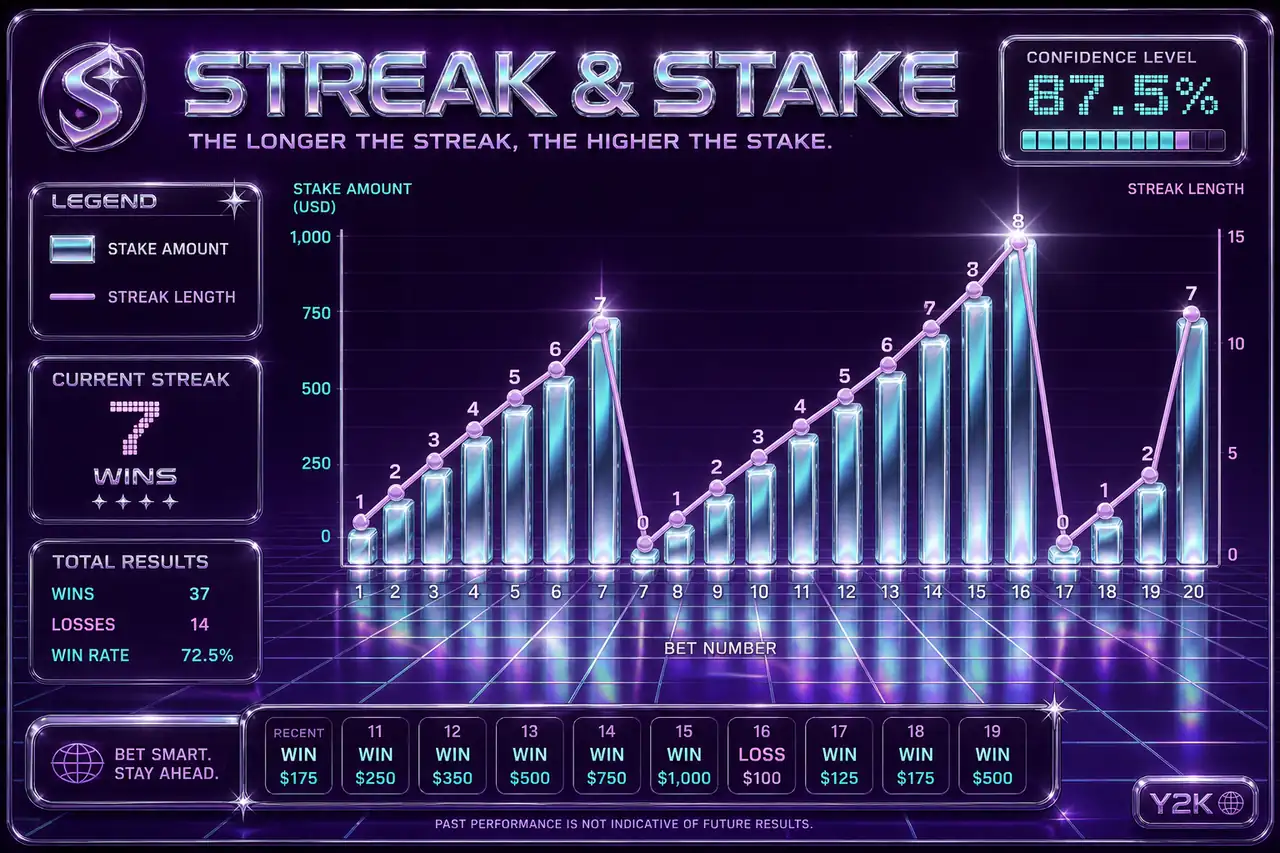
The hot-hand bias is the twin of loss chasing. Three winning tickets in a row produce a conviction that the next ticket is more likely to win. The research on streak perception shows this conviction is almost always wrong on priced markets, where outcomes are statistically independent. The streak is a feature of small samples, not of the player’s reading.
The correction is the flat stake. A ticket after three winners is placed at the same stake as every other ticket of the weekend. The ledger reads this cleanly, and the following month’s review shows whether the overall pattern is working.
- Flat stake per weekend ticket
- No bonus allocation after wins
- No reduction after losses either
- Review flatness at the end of the month
The Illusion of Control Over-Weights Knowledge
The illusion of control is the sense that specific knowledge about a match can meaningfully move the price in your favour. Research on this pattern has repeatedly shown that casual bettors over-estimate the predictive weight of their own information, especially on markets where the operator’s model is highly refined.
Research note. Research consistently shows casual bettors over-estimate the predictive weight of their own information on priced markets.
| Control check | How to run it |
|---|---|
| Implied probability | One divided by decimal odds |
| Match read comparison | Against your own quick view |
| Market narrowing | Only leagues you actually watch |
The honest correction is the implied probability check. Divide one by the decimal odds. Compare the result to your own quick read of the match. If the gap is small, the knowledge advantage is probably small too. The illusion of control shrinks when the price is read as a probability rather than as a number.
Where Specific Knowledge Does Carry Weight
Specific knowledge sometimes carries real weight. A Serbian fan who follows a lower-division fixture closely often knows things about the team that the trading desk reads less reliably. A basketball fan who watches a specific player every night often reads prop lines better than the model does on those specific lines. The illusion of control is a general pattern, not an absolute rule.
The correction is specificity. The illusion weakens when a bettor confines their advantage to the narrow markets where the knowledge is real, and refuses to extend it to markets where the knowledge is thin. A Serbian fan who bets only on the leagues they actually watch has already done most of the behavioural work.
Anchoring on Headline Odds Hides the Margin
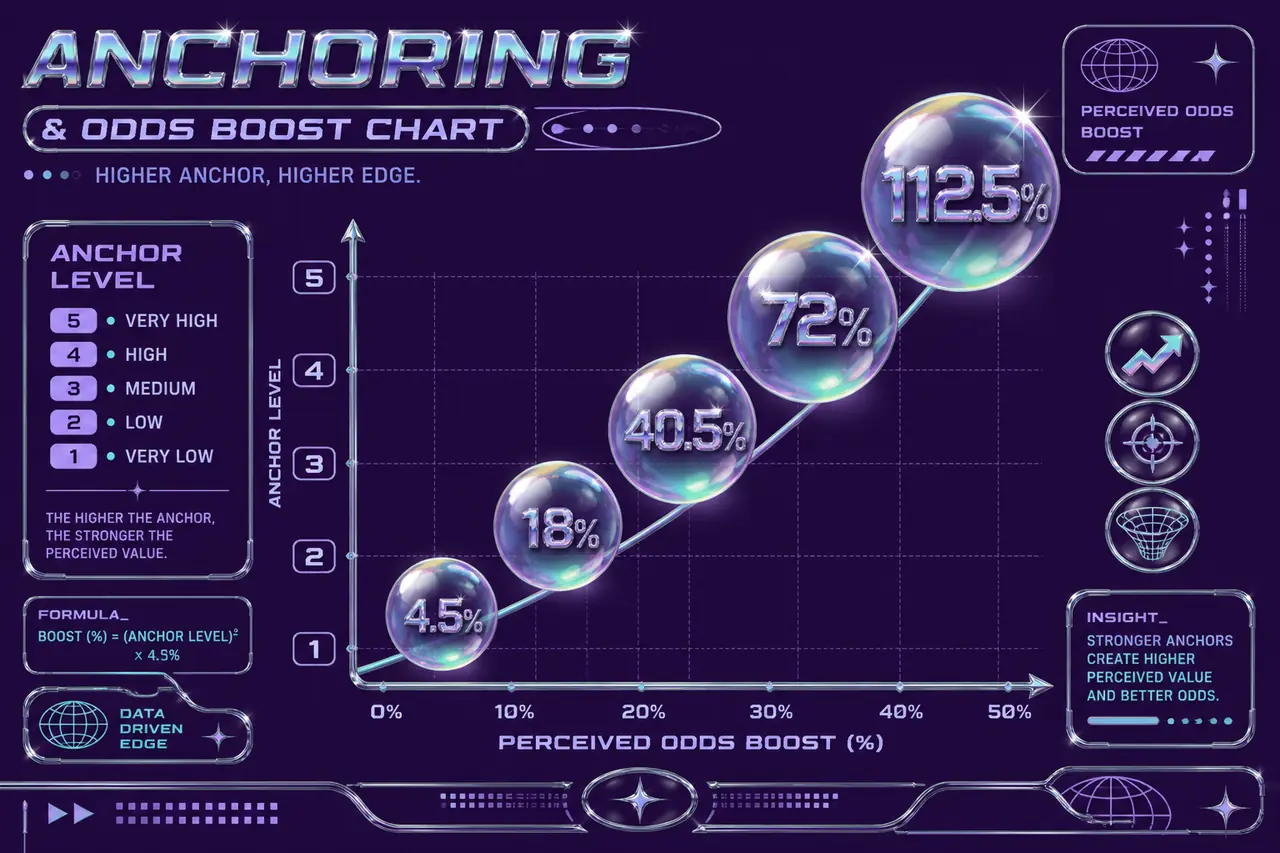
Anchoring is the behavioural tendency to over-weight the first number seen. In sports betting, the headline odds on a promotion or the biggest number on a prop board often anchor a decision before the player checks the native margin on the same market.
Note. The headline odds anchor the decision before the native margin on the same market is checked.
- Add implied probabilities across all outcomes
- Subtract one hundred percent to find the margin
- Compare the margin to the same market elsewhere
The correction is the two-second overround sum. Add the implied probabilities across every outcome of a market. The total is always above one hundred percent. The excess is the operator margin, and reading it before placing the bet turns the headline odds into a comparable number rather than an anchoring one.
How Odds Boosts Interact With Anchoring
Odds boosts are a direct exploitation of anchoring. A long-price market with a boost looks attractive against the plain number without the boost. The honest check is whether the boosted price still carries a wider margin than a main market would at the same implied probability. Often it does, which means the boost is less generous than the headline implies.
A Serbian player who runs the two-second overround sum on every boosted market quickly builds the intuition for which boosts are useful and which are marketing. Most boosts, in practice, do not move the player’s expected return meaningfully; a few do. The sum tells the difference in seconds.
The Availability Heuristic Over-Weights the Recent
The availability heuristic is the behavioural tendency to over-weight whatever is most easily recalled. For a Serbian weekend bettor, this usually means the most recent match or the most dramatic result. A team’s last three results carry more weight in the mind than the season average, which can push the slip toward the recent form regardless of whether the recent form is predictive.
Research note. The written view sentence addresses availability pressure more effectively than any mental resolution does.
- Write the view down on Thursday
- Reread it on Saturday morning
- Place the slip only if the sentence still holds
The correction is the written view, placed on paper before opening the slip. The written sentence anchors the view to the full-season reading rather than to the last weekend’s result. A sentence that survives Saturday morning after being written on Thursday is usually robust against availability pressure.
Why the Written View Beats the Mental View
The written view beats the mental view because it is immune to the drift that happens between the moment of writing and the moment of betting. The mental view updates with every new piece of information; the written view holds steady and asks you to justify any change before placing the slip.
Research on commitment devices has shown this effect across many hobbies and many domains. The specific application in sports betting is simple: write the view, read it before the slip, place the bet only if the view still holds. This single habit addresses several behavioural patterns at once.
Loss Aversion Shapes Cash-Out Decisions
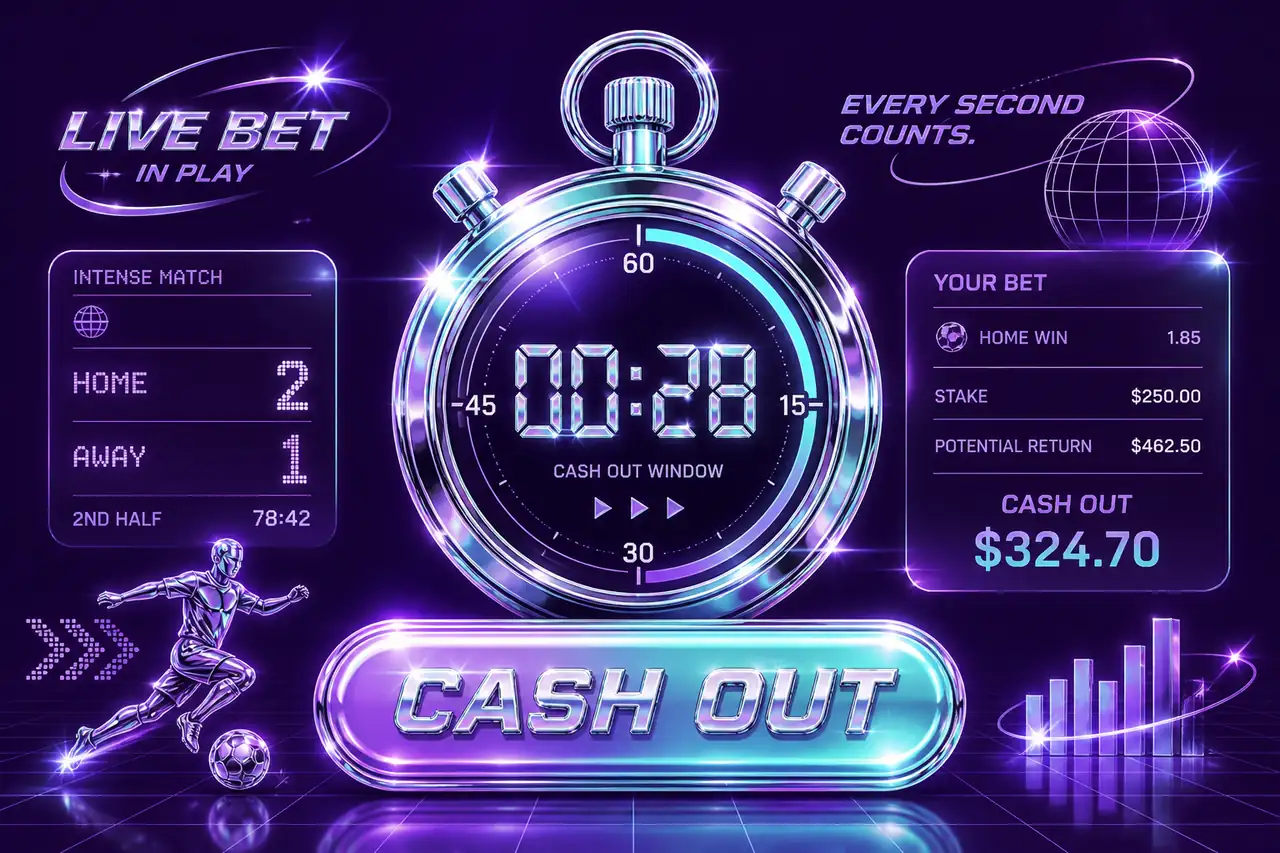
Loss aversion is the behavioural tendency to feel losses more intensely than equivalent gains. In sports betting, loss aversion often shows up in cash-out decisions on losing positions. A ticket trailing at halftime triggers the loss-aversion instinct, which pushes the player toward cash out to recover part of the stake, even when the pre-match view still holds.
Observation. Loss aversion often pushes cash-out decisions on losing positions when the pre-match view still holds.
- Pre-set cash-out trigger before kickoff
- Per-match live-stake cap
- Session timer at a sensible window
- Reality check at the hour mark
The correction is a pre-set cash-out trigger. Decide before the match whether cash out is on the table, and if so, under what conditions. If the trigger does not fire, the slip runs. The pre-set trigger holds against loss aversion in a way that an in-moment decision does not.
What In-Play Research Shows
A UK study of in-play bettors summarised in The Conversation found that bettors most frustrated and reactive during matches used instant deposit features most, and higher tilting correlated with higher reported gambling harm. The pattern maps directly onto loss aversion: the losing position produces the frustration, the frustration produces the quick deposit, the quick deposit funds the recovery bet.
The correction stack is cumulative. A pre-set cash-out trigger, a per-match live-stake cap, a session timer, and a reality check at the hour mark together are more effective than any single tool. The Serbian regulatory package of January 2025 made these tools more visible in the account menu for exactly this reason.
Mental Accounting Treats Winnings as Different Money
Mental accounting is the behavioural tendency to treat money differently based on where it came from. In sports betting, a win often feels like free money that can be staked more freely than the original deposit. The feeling is wrong; a winning balance is still real money that will show up on the next withdrawal.
The correction is a single ledger that treats all balance as one amount. Deposits, winnings, bonus credits, and settlement payouts all flow into the same running total. The ledger does not care where the money came from, which is the honest view of the account.
- Starting balance at the top of the month
- All deposits added
- All stakes subtracted
- All returns added
- Final balance at the end of the month
Five lines, one running total, no mental compartments. The ledger reads the hobby as a single flow, which is what the hobby actually is.
How Operators Use Behavioural Science Themselves
Operators use behavioural science too. Push notifications are calibrated to times and events that maximise opens. Promotion emails arrive after a losing weekend when loss-chasing susceptibility is highest. Welcome bonuses anchor new accounts to a specific deposit amount. Loyalty programmes exploit sunk-cost reasoning to retain accounts across lean months.
None of this is sinister in itself. Operators are commercial entities running a priced-entertainment product. What matters for a Serbian player is awareness. A notification received during a losing weekend is a behavioural touch; a decision taken immediately after it is likely to be a behaviourally anchored one. The correction is a short pause between notification and action.
A Guide With Behavioural Integrity Helps
A guide that lists only licensed operators and documents their actual terms helps counteract several of the behavioural patterns above. A Serbian guide such as www.burazbet.com is a good thing for a Serbian player because it covers only operators on the Games of Chance Administration register, which means the comparison stays within the regulated market. This reduces the anchoring effect that unlicensed operators try to exploit with aggressive promotions.
The guide is useful at the exact moment that behavioural pressure peaks. When a losing weekend tempts a shift to a different operator, the licensed-only guide keeps the search inside the regulated market rather than toward the unlicensed site that just offered an aggressive welcome bonus in an advert.
The Behavioural Toolkit Fits in One Habit
The behavioural toolkit for a Serbian weekend bettor fits in one combined habit: write the view before the slip, place the flat stake, read the implied probability, hold the pre-set cash-out trigger, and keep a single ledger. That one combined habit addresses loss chasing, hot-hand bias, illusion of control, anchoring, availability, loss aversion and mental accounting at the same time.

None of this is a performance intervention. The toolkit will not pick winners or produce an edge. What it will do is keep the hobby inside the shape the player wants it to have, across a full season, through winning and losing weekends alike. That is the quietly honest return on behavioural science applied to a Serbian weekend of sports betting.
What a Serbian Player Can Take From the Science
The science is reassuring rather than threatening. The behavioural patterns are not personal failings; they are general human tendencies that surface in any priced-entertainment product. Recognising them, naming them, and installing the small corrections above addresses most of them without requiring heroic self-discipline.
Takeaway. Recognising the patterns is where the behavioural interventions start to work for a Serbian weekend fan.
- Pick one correction to install for a month
- Review the ledger at the end of the month
- Add a second correction the following month if the first held
- Keep going slowly across the season
Behavioural science behind sports betting decisions is a long way of saying that the hobby is easier when the player works with their own tendencies rather than against them. The Serbian licensed framework provides the tools; the research tells you which tools work; your own weekend provides the habit. The three together produce the kind of season the player wanted when they started.
What to Do Next
Pick one behavioural correction from the list above that resonates most with your own ledger. Install it for a month. Review the ledger at the end of the month. If the correction worked, add a second one for the following month. If it did not, pick a different one. Behavioural change compounds slowly, and one correction a month over six months is more than enough to reshape a season.
The hobby belongs to the player. The science belongs to all of us. The weekend belongs to whoever shows up on Saturday morning with coffee and a written view.